San Antonio sits on a tricky geological patchwork. The Balcones Escarpment cuts right through the metro area, creating a sharp transition from hard Edwards Limestone to the west and expansive Houston Black Clay to the east. Tunnel through the wrong spot and you hit karst voids in the rock or squeeze through swelling clays. The humidity here adds another layer: seasonal moisture swings cause the clay to heave and shrink by inches. For a soft ground tunnel alignment, understanding this dynamic means the difference between a stable bore and a collapsed face. We pair field data from the CPT test with lab index testing to map out exactly where the soil transitions occur along the proposed drive.
Tunneling through San Antonio's transition zone means managing karst voids on one side and swelling clay on the other, sometimes within the same drive.
Process overview
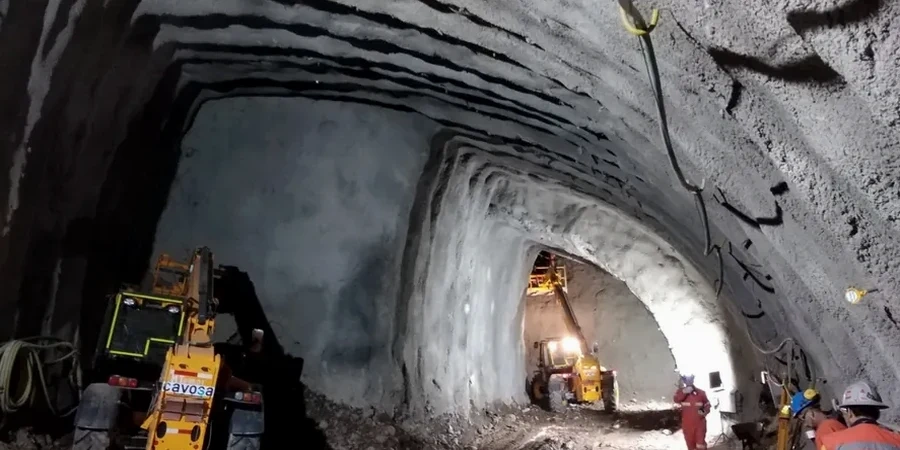
Local ground factors
We reviewed a microtunnel drive under Loop 410 last year where the contractor hit a karst void that hadn't been mapped. The TBM lost face pressure, the ground above sagged, and the pavement cracked within hours. The repair cost ran into six figures and involved emergency grouting and a lane closure that lasted three weeks. The root cause was insufficient geophysics: four boreholes across a 600-foot drive didn't capture the void. Our protocol now mandates a continuous resistivity line along the alignment and cross-hole seismic tomography at 50-foot intervals when tunneling within half a mile of known karst features. The Edwards Aquifer recharge zone covers much of northern San Antonio, so the risk is not just structural: a tunnel collapse can create a direct conduit for surface contaminants into the drinking water supply. The TCEQ takes that very seriously.
Video resource
Regulatory framework
ASCE 7-22 Chapter 9: Geotechnical Investigations, IBC 2021 Section 1803: Geotechnical Investigations, ASTM D1586: Standard Penetration Test (SPT), ASTM D2487: Unified Soil Classification System, FHWA-NHI-10-034: Technical Manual for Tunnels in Soft Ground
Additional services
Karst and Cavity Detection
Electrical resistivity tomography and cross-hole seismic surveys to map dissolution features along the tunnel horizon before excavation begins.
Face Stability Analysis
Limit equilibrium and finite element modeling of tunnel face support pressure, incorporating undrained shear strength profiles and groundwater conditions.
Settlement Risk Assessment
Empirical and numerical prediction of surface settlement troughs using Peck's method, calibrated to San Antonio's interbedded clay and limestone stratigraphy.
Typical parameters
Top questions
What makes soft ground tunneling different in San Antonio compared to other cities?
The Balcones Escarpment creates a sharp geological boundary within the city limits. A single tunnel drive can transition from hard limestone with karst features to soft, expansive clay. This mixed-face condition requires a flexible ground characterization program that combines geophysics, CPT soundings, and laboratory testing to map the rockhead precisely and quantify the swelling potential of the clays. Most cities deal with one soil type; here we manage two fundamentally different behaviors in the same project.
What permits or regulations apply to tunnel investigations near the Edwards Aquifer?
San Antonio sits over the Edwards Aquifer Recharge Zone, which triggers TCEQ oversight. Any geotechnical investigation deeper than the soil layer must follow Edwards Aquifer Protection Program guidelines. That means strict borehole sealing protocols, grouting from the bottom up with bentonite-cement mixes, and documentation of all drilling fluids. We coordinate directly with the San Antonio Water System review process before mobilizing the drill rig.
How much does a geotechnical analysis for a soft soil tunnel project cost in San Antonio?
For a typical soft ground tunnel analysis in the San Antonio area, the cost ranges from US$4,500 for a preliminary desk study and limited field program to US$16,840 for a comprehensive package that includes multiple CPT soundings, geophysical lines, laboratory testing, and numerical modeling. The final scope depends on tunnel length, proximity to karst features, and whether the alignment crosses the Edwards Aquifer recharge zone.
Do you run the triaxial tests in-house or send them to an outside lab?
We run all consolidated-undrained and consolidated-drained triaxial tests in our own laboratory under ASTM D4767 and D7181 standards. This gives us direct control over turnaround time and quality. For a tunnel project in San Antonio's clays, we typically run three sets of CU tests at confining pressures that bracket the in-situ stress at tunnel depth, plus a set of swell pressure tests if the plasticity index exceeds 25.